As we age, maintaining balance becomes increasingly important for staying active, independent, and safe. One simple misstep can lead to a fall, and for older adults, falls are the leading cause of injury and loss of independence. The good news is that balance training is a powerful way to reduce that risk.
Why Balance Training Matters
Balance training focuses on improving postural stability – your ability to stay upright and steady whether standing still or moving. When older adults practice balance exercises consistently, they strengthen the muscles that support their joints, improve coordination, and enhance overall body awareness.
The result is safer movement during everyday activities like walking, climbing stairs, carrying groceries, or getting up from a chair.
Beyond physical benefits, balance training also reduces the fear of falling. That confidence boost is incredibly important.
Benefits of Balance Training
1. Reduced Risk of Falls
Regular balance exercises improve coordination and stability, making it less likely that a stumble turns into a fall. Stronger muscles and better posture also provide added protection if a fall does occur.
2. Greater Confidence and Independence
Improved balance allows older adults to move more freely without hesitation. Climbing stairs, being on uneven surfaces, and performing daily tasks become less intimidating.
3. Stronger Lower Body
Exercises that target hips and legs – using resistance bands or light weights – build the strength necessary for stability. Strong lower-body muscles are essential for standing, walking, and recovering from slips.
4. Improved Core Strength and Stability
A strong core supports proper postures and makes walking easier and more efficient. Core stability also plays a major role in maintaining balance during movement.
5. Better Flexibility
Stretching exercises improve joint range of motion, allowing smoother and safer movement patterns.
6. Reduced Injury Severity
Better muscle tone and posture can help protect against fractures. In many cases, individuals who maintain strength and balance recover more quickly and demonstrate greater resilience after a fall.
Effective Balance Exercises
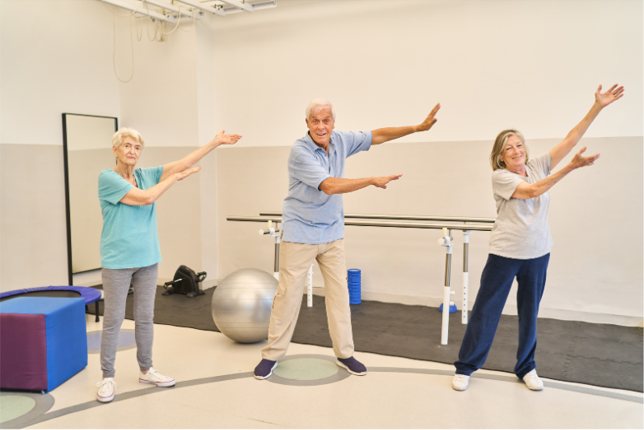
Balance training doesn’t have to be complicated. A variety of exercises can improve stability and strength:
- Walking exercises that improve dynamic balance
- Chair yoga, a low-impact option that enhances balance and flexibility
- Strength training to build hips, legs and core stability
- Functional exercises that mimic everyday movements like stepping, turning, or reaching
How Often Should Seniors Exercise?
For meaningful results, older adults should aim to engage in balance and strength exercises about three times per week for approximately 45 minutes per session. Consistency is key.
Consult Your Physician
Before starting any new exercise routine – especially if feeling unsteady or experiencing frequent balance issues – older adults should consult their physician.